The soil profile under a project on the near-east side of Indianapolis rarely looks like what you find up in Carmel. The broad outwash plains that shaped the White River valley left deep sand and gravel deposits on the south and west sides, while the northeast corridor toward Fort Wayne sits on a thick mantle of Wisconsin-age till. That contrast matters for foundation design. A standard penetration test program run purely by textbook without factoring in the local drift geology can miss the soft interbeds that complicate bearing capacity estimates. We see it regularly when reviewing older geotech reports. Combining SPT drilling with a CPT test helps verify those transitions, and in the till-heavy zones north of the city a grain-size analysis clarifies whether you are dealing with a well-graded or gap-graded matrix before finalizing pile lengths.
A 6-inch N-value shift in Indianapolis till can mean the difference between a spread footing and a deep foundation — we log every 6 inches, not just the 12-inch average.
Methodology and scope
Local considerations
Indianapolis sits at roughly 718 feet above sea level, and the relatively subdued topography hides a real risk: variable fill thickness across the older urban core. Decades of demolition and redevelopment left pockets of brick rubble, cinders, and mixed debris that can extend 10 feet or more below street grade. When an SPT program skips the first 15 feet on the assumption of native till, those fill zones go undetected and differential settlement shows up later. The 2011 Mineral, Virginia earthquake, though distant, reminded Midwest engineers that intraplate seismicity is not zero — IBC classifies much of Indiana as Seismic Design Category C, which means liquefaction screening in the sandier outwash units is not optional. A sparse borehole pattern that misses a loose lens at 20 feet can produce a foundation design that looks conservative on paper but fails to account for the most critical layer on site.
Applicable standards
ASTM D1586-18: Standard Test Method for Standard Penetration Test (SPT) and Split-Barrel Sampling of Soils, ASTM D2487-17: Standard Practice for Classification of Soils for Engineering Purposes (Unified Soil Classification System), ASCE 7-22: Minimum Design Loads and Associated Criteria for Buildings and Other Structures, IBC 2021: International Building Code — Chapter 18 Soils and Foundations
Associated technical services
SPT Drilling & Field Logging
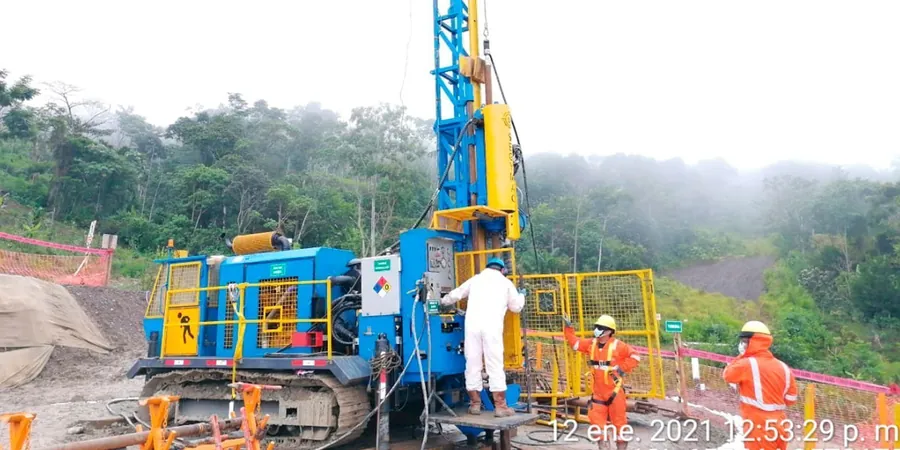
Mobile drill rigs with automatic trip hammers. We handle the full field program from utility clearance through borehole backfill, logging blow counts, groundwater observations, and sample recovery in real time.
Laboratory Classification Suite
Disturbed samples from the split-spoon go directly to our lab for grain-size distribution, Atterberg limits, and moisture content per ASTM D4318 and ASTM D6913. Turnaround is typically 3 business days.
Liquefaction Screening
For sites in the White River floodplain or outwash corridors, we run NCEER-based simplified procedures using corrected N60 data to evaluate liquefaction potential at each critical depth.
Foundation Parameter Reports
We translate SPT N-values into net allowable bearing pressure, estimated settlement, and pile skin friction ranges using methods from FHWA GEC-5 and local Marion County precedent.
Typical parameters
Frequently asked questions
How much does an SPT test program cost in Indianapolis?
For a typical single-family or light commercial project in Marion County, an SPT investigation with two to three boreholes generally falls between US$570 and US$860 per borehole, including mobilization within the metro area, field logging, and a summary report. Deeper holes, difficult access, or extensive lab testing push toward the higher end.
How many boreholes do I need for a commercial building in Indianapolis?
IBC requires at least one borehole for every 2,500 square feet of building footprint, with a minimum of two. For irregular footprints or sites with known fill, we typically add a third hole to bracket the variability. The Indiana Department of Homeland Security reviews geotech submittals against those code minimums.
What depth should SPT boreholes reach in central Indiana?
The rule of thumb is 1.5 to 2 times the foundation width below the bearing elevation. In the till plains of Indianapolis, that often means 25 to 35 feet for a spread-footing design, though deeper holes are needed if the N-values stay below 10 past 20 feet or if deep foundations are being considered.
Do you handle the IBC Chapter 18 soil report for permit submittals?
Yes, we compile the field logs, lab data, and design parameters into a sealed geotechnical report that addresses bearing capacity, lateral earth pressure, settlement estimates, and groundwater conditions. The report follows the format expected by Marion County plan review and references the applicable ASCE 7 load combinations.