Indianapolis sits atop a complex stack of glacial till and outwash deposits averaging 100 to 350 ft thick, with the Wisconsin-age Trafalgar Formation dominating the near-surface — a stiff, overconsolidated silty clay that routinely tests above 2.0 ksf in undrained shear but remains highly moisture-sensitive in the active zone. Frost penetration reaches 30 inches per INDOT design standards, and the groundwater table oscillates between 3 and 8 ft across Marion County, creating seasonal pumping conditions that accelerate faulting in poorly drained rigid pavements. For concrete pavements on this subgrade, the jointed plain concrete pavement (JPCP) system remains the workhorse, but its long-term performance depends on accurate characterization of the modulus of subgrade reaction (k-value) rather than a generic CBR correlation — especially where the till transitions laterally to granular outwash within the same alignment. When the subgrade variability exceeds what conventional borings can resolve, our team integrates MASW profiling to map stiffness contrasts along the corridor before fixing the slab thickness, ensuring the design modulus represents the actual three-dimensional ground response rather than a single-point assumption.
Curling stress at the slab corner can exceed 250 psi in an Indianapolis January — joint spacing and load-transfer design must account for the thermal gradient, not just the axle load.
Methodology and scope
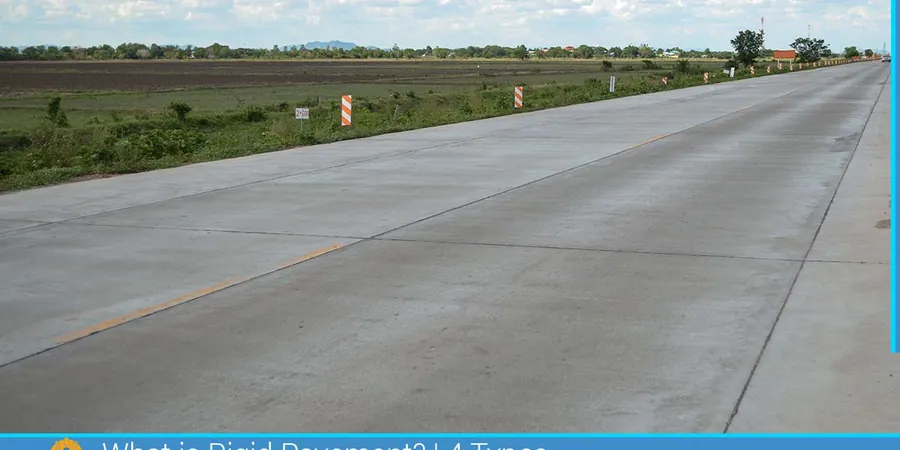
Local considerations
A slipform paver moving through downtown Indianapolis at night — vibrators humming at 8,000 vpm, dowel basket inserters cycling every 15 ft, and a texture broom dragging behind — lays 400 cubic yards an hour on a well-organized pour, but the machine doesn’t read the subgrade. The risk we see repeatedly in post-construction forensic work is uncontrolled curling and warping when the slab’s built-in temperature gradient wasn’t matched to the local climate data: Indianapolis sees a 40°F differential between the top and bottom of a 10-inch slab on a sunny March afternoon, and if the joint activation doesn’t occur before the first freeze, the corner cracks propagate from the top down within two years. Pumping and loss of support under the leave slab are accelerated by the high water table in the White River floodplain, where fines migration through untreated aggregate bases creates voids detectable only with falling-weight deflectometer testing. We mitigate these mechanisms by specifying a minimum 4-inch cement-treated permeable base with edge drains discharging to storm structures, and by requiring dowel alignment verification using MIT Scan-2 or equivalent before any concrete is placed.
Applicable standards
INDOT Standard Specifications Section 500 — Rigid Pavement, AASHTO Guide for Design of Pavement Structures (1993, 1998 supplement), ACI 360R-10 Guide to Design of Slabs-on-Ground, ASTM C78 / C293 — Flexural Strength of Concrete, ASTM D1196 — Nonrepetitive Static Plate Load Test (k-value)
Associated technical services
Thickness Design & Fatigue Analysis
AASHTO 93 and PCA-based thickness determination for JPCP and CRCP, including MEPDG Level 2 inputs for Indianapolis climate station data. We calculate cumulative fatigue damage using axle load spectra from actual traffic counts, and model erosion damage for doweled and undoweled joints under the city’s freeze-thaw cycles.
Joint Layout & Load Transfer Specification
Detailed jointing plans for longitudinal, transverse, and isolation joints with dowel bar sizing per ACPA guidelines. We specify dowel diameter (typically 1.25 to 1.5 inches for 9- to 11-inch slabs), epoxy coating class, and basket placement tolerances, and tie the joint spacing to the concrete’s coefficient of thermal expansion and the zero-stress temperature for Indianapolis.
Typical parameters
Frequently asked questions
What is the cost range for rigid pavement design and testing for an Indianapolis commercial lot?
For a commercial lot in Indianapolis, rigid pavement design including geotechnical investigation, k-value determination, thickness design, and joint layout plans typically ranges from US$1,740 to US$6,460 depending on lot size, traffic loading, and subgrade complexity. Projects requiring MASW profiling or detailed MEPDG analysis fall toward the upper end.
How does the frost depth in Indianapolis affect rigid pavement design?
INDOT mandates a frost protection depth of 30 inches below the finished subgrade. In rigid pavement design, this translates to a minimum combined thickness of slab plus base that isolates frost-susceptible soils from the freezing front. We specify non-frost-susceptible (NFS) base material — typically crushed stone with less than 5% passing the No. 200 sieve — and in areas with high groundwater we include a separation geotextile to prevent fines migration during thaw cycles.
Which subgrade strength parameter matters most for Indianapolis rigid pavements?
The modulus of subgrade reaction (k-value) in pci is the primary parameter for rigid pavement design, not CBR. In Indianapolis glacial till, we determine k via plate load testing (ASTM D1196) or correlation from resilient modulus testing, with typical untreated values between 100 and 150 pci. When values fall below 100 pci, we design a cement-treated base or lime-stabilized subgrade to achieve a composite k of at least 200 pci.
Do you design fiber-reinforced rigid pavements for industrial applications in Indianapolis?
Yes — for heavy industrial yards, distribution centers, and bus maintenance facilities across Indianapolis we design macro-synthetic and steel-fiber-reinforced slabs using the ACI 360R and ASTM C1609 framework. Fiber dosage rates are specified based on the required residual flexural strength (typically f150,3 at 20–30% of MOR), and joint spacing is reduced to 6–8 ft with saw-cut joints instead of formed construction joints, eliminating dowels while maintaining aggregate interlock load transfer.