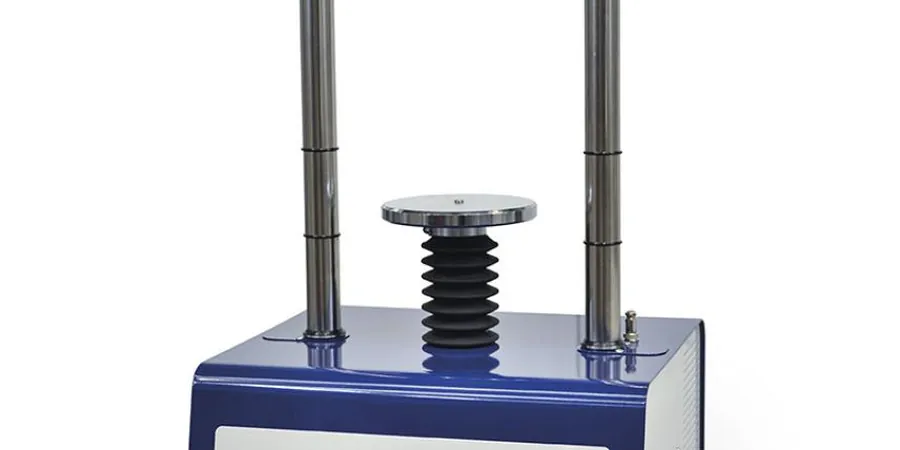
Too many site plans in Indianapolis rely on generic bearing capacity tables and then wonder why excavations in the downtown area or along the White River need constant dewatering and extra shoring. The problem is rarely the structural design—it is the assumption that the soil will behave the same way under load as it does in a jar on a lab shelf. A properly executed triaxial test measures the actual shear strength of the formation, pore pressure response, and effective stress path, giving the geotechnical engineer real numbers to work with instead of textbook defaults. When we combine these results with field data from an SPT drilling program, the foundation design stops being a gamble and starts reflecting the layered glacial sequences that define the subsurface across Marion County. The equipment at our partner lab in Indianapolis runs consolidated-undrained and drained stages that capture the behavior of the dense till and the looser outwash sands that sit beneath so many commercial pads in the region.
A single consolidated-undrained triaxial stage reveals more about the soil's real behavior under load than twenty Standard Penetration Test blows ever could.
Methodology and scope
Local considerations
The subsurface contrast between the near-downtown White River corridor and the upland sites around Castleton illustrates why one-size-fits-all strength parameters fail. Near the river, post-glacial alluvium and clean outwash sands drain freely—effective stress governs, and drained triaxial parameters are reliable for long-term stability. Five miles north in the Castleton area, the glacial till is dense but fissured, and the pore pressure response during undrained loading can be unpredictable; a CU test with pore pressure measurement is essential to catch the contractive tendency early. Skipping the triaxial phase and relying on SPT correlations in that till often overestimates the friction angle by three to five degrees, which is enough to undersize a retaining wall or misjudge the factor of safety on a temporary slope. For deep excavations near the Indiana Central Canal or along the I-65/I-70 interchange, the triaxial data becomes the anchor point for the entire earth retention design, and the cost of not having it is measured in shoring delays and groundwater blow-ins.
Applicable standards
ASTM D4767-11 (2020) – Consolidated Undrained Triaxial Compression Test for Cohesive Soils, ASTM D2850-15 – Unconsolidated-Undrained Triaxial Compression Test on Cohesive Soils, ASTM D7181-11 – Consolidated Drained Triaxial Compression Test for Soils, IBC 2021 Chapter 18 – Soils and Foundations (reference to triaxial parameters for bearing capacity and lateral earth pressure), FHWA GEC No. 5 – Evaluation of Soil and Rock Properties (triaxial test protocols for geotechnical design)
Associated technical services
Consolidated-Undrained Triaxial with Pore Pressure Measurement
Three-specimen CU suite per ASTM D4767, including back-pressure saturation, K0 or isotropic consolidation, and undrained shear at a strain rate controlled by consolidation behavior. Delivers effective stress friction angle, cohesion intercept, and Skempton's A coefficient at failure. Recommended for foundation design in saturated glacial till and for slope stability analyses where rapid drawdown or construction loading is anticipated.
Unconsolidated-Undrained Triaxial for Temporary Works
Quick-turn UU testing per ASTM D2850 for short-term stability checks in excavations, trench boxes, and temporary retaining systems. Three specimens sheared at different confining pressures without consolidation. Provides total stress parameters (φ=0 or φu, cu) that feed directly into undrained bearing capacity calculations and temporary shoring design.
Typical parameters
Frequently asked questions
How much does a triaxial test program cost in Indianapolis?
A full triaxial suite—three specimens with consolidation and undrained shear stages, pore pressure logging, and a comprehensive report with Mohr-Coulomb parameters—runs between US$1,690 and US$2,350 depending on the number of depths, specimen prep complexity, and whether we need to run drained stages. The price covers sample trimming, back-pressure saturation, shear, data reduction, and the final engineering report with stress paths and strength envelopes.
What is the difference between UU, CU, and CD triaxial tests?
UU (unconsolidated-undrained) tests measure total stress strength with no drainage allowed—useful for short-term stability in low-permeability soils. CU (consolidated-undrained) tests include a consolidation phase before undrained shear and capture pore pressure response, yielding effective stress parameters (c' and φ'). CD (consolidated-drained) tests allow full drainage during shear at a slow rate and are appropriate for free-draining sands and long-term drained conditions in clays.
How long does triaxial testing take from sample delivery to report?
A standard CU suite on cohesive soil takes 7 to 10 working days. The consolidation phase for each specimen can require 24 to 48 hours depending on soil permeability, and the shear stage runs at a slow, controlled rate to allow pore pressure equalization. If the project requires CD testing, add 4 to 6 additional days due to the slower shear rate. We can expedite UU testing in 3 to 4 days for urgent excavation support decisions.
Do you need undisturbed Shelby tube samples or can you use reconstituted specimens?
For foundation design and slope stability, undisturbed Shelby tube samples give the most representative strength parameters. We trim specimens directly from the tubes and avoid remolding. For fill compaction control or research programs, we can prepare reconstituted specimens by moist tamping to a target density and moisture content, but the results are labeled as reconstituted and used for comparative purposes rather than in-situ characterization.